
Kamata Guitar Lessons
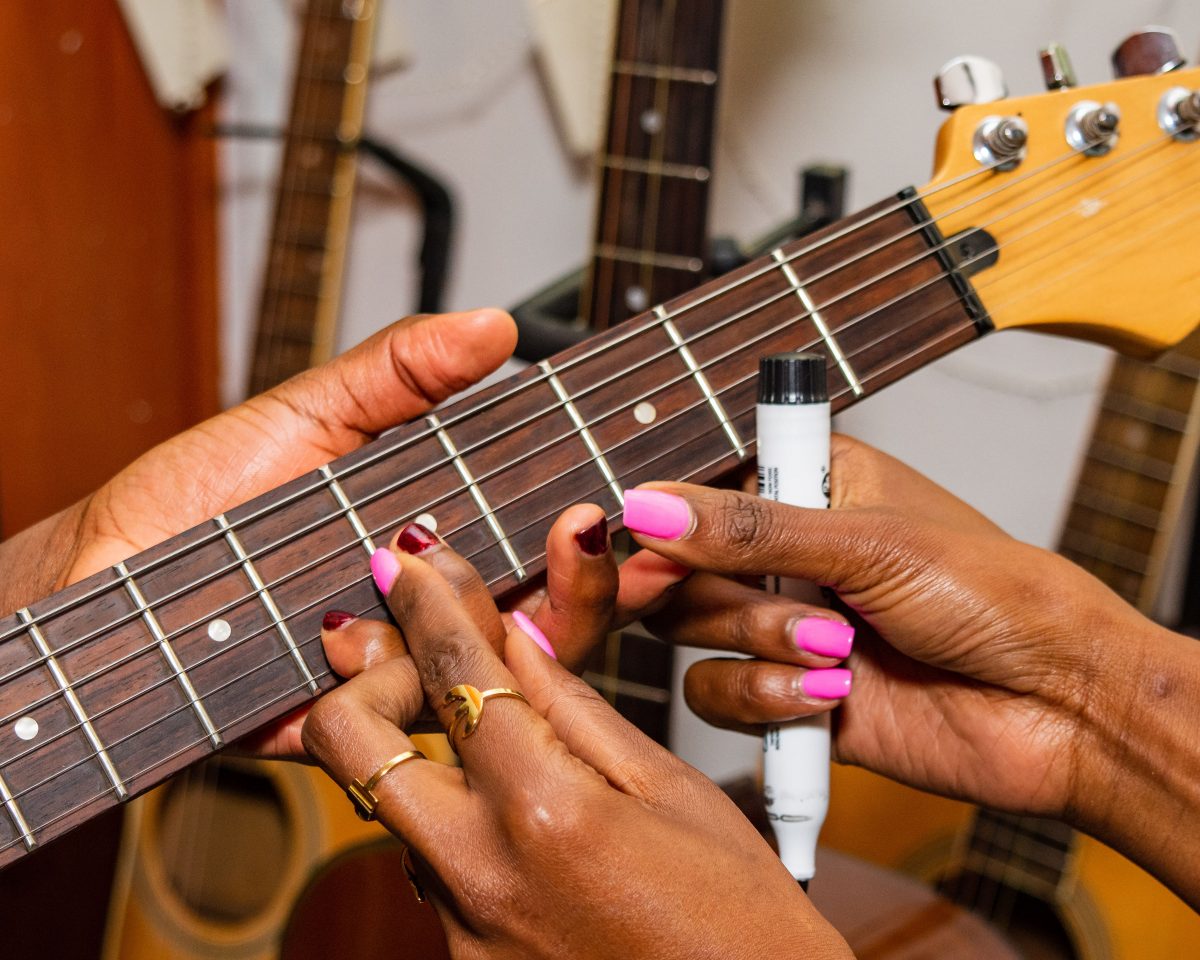
At Kamata Music School, we offer top-quality guitar lessons from the most experienced, dedicated and passionate tutors. We teach in well-equipped classes in a friendly and comfortable environment. Our students come from a wide range of backgrounds and experience levels. Our goal is to help everyone take their guitar playing to the next level.
All of our highly qualified guitar tutors are fully trained. They teach both acoustic and electric guitars. We accept students of all ages and abilities, from beginner to advanced. Whether you’re a beginner looking to learn how to play the guitar or a player with experience looking to sharpen your skills, you’re more than welcome at our school!
Why we are the Best
Instructors Qualification and Experience
At Kamata Music School, we’re proud to have highly qualified and experienced teachers. They are ready to help you reach your goals. We take pride in producing many prominent guitarists in the region. Our track record speaks for itself having trained over 6000 students in music.
Access
The School is known for its ability to accept students without regard to their music or extracurricular backgrounds. Qualification is simply on the basis of potential and talent. We are able to train anyone interested in becoming a great guitarist.
Affordability
Our lessons are cost-friendly. We give the best lessons at an affordable price. You will be able to pay for the lessons despite the economic challenges. Our fee structure suits everyone in society.
Flexible Program
Kamata Guitar lessons are either 1 hour or 2 hours long. You can always book at a time convenient for you. We also offer part-time lessons on weekdays. This means our lessons are available after work.
Our guitar lessons are fun and interactive. It’s packed with all the information you need to become a strong, confident guitarist. We’ll give you an understanding of the theory behind classic songs. Additionally, we will give you the skills and techniques you need to make the most of your playing. Our lessons guarantee the best possible progress and will help you become a better guitarist.
The Kamata School 3-Month Fast-Track Guitar Plan!
Are you in Nairobi and dreaming of playing the guitar? At Kamata Music School, we know that passion and speed often go hand-in-hand. While becoming a master takes years, you can absolutely build a strong, playable foundation in just three months with the right techniques and consistent practice.
Here is the Kamata School-approved guide for the most effective techniques to learn the guitar fast!
Phase 1: The First 30 Days – Laying the Foundation (The Basics)
The first month is all about building finger strength, coordination, and fundamental knowledge. Consistency (even 30 minutes a day) is more important than marathon sessions.
- Master the Open Chords
Focus on the essential Major and Minor Open Chords. These are the building blocks of thousands of songs.
- Key Chords to Learn: C Major, G Major, D Major, E Major, A Major, E Minor, and A Minor.
- Technique: Practice clean finger placement. Ensure all strings ring clearly without buzzing. Use a metronome (even a phone app!) from day one to develop a strong sense of rhythm.
- Kamata Tip: Drill chord switching between pairs (e.g., G to C, A minor to E minor) very slowly before speeding up. This builds crucial muscle memory.
- Essential Hand Exercises
To play fluently, you need independent fingers.
- Technique: Practice the Chromatic Exercise (also known as the 1-2-3-4 exercise) up and down the fretboard. Use one finger per fret (1st finger on fret 1, 2nd on fret 2, etc.) and alternate your picking hand. This builds endurance and two-hand coordination.
- Must-Have Skill: Learn to tune your guitar by ear and with a tuner.
- Basic Strumming and Rhythm
Rhythm is the heart of music.
- Technique: Learn simple Down-Up strumming patterns. Start with basic quarter notes and eighth notes. Play along to a metronome, focusing only on hitting the strings on time, even if the chord change is messy.

Phase 2: The Second 30 Days – Expanding Your Skillset
In the second month, you move from basic blocks to connecting them into music.
- Dive into Scales
Scales are the DNA of lead playing and music theory.
- Key Scale: Focus intensely on the Minor Pentatonic Scale (the most popular scale in rock, blues, and pop). Learn one or two patterns and practice them until you can play them without looking at your fingers.
- Technique: Use the scale to practice small licks or riffs. This makes the exercise musical and fun, fighting off beginner burnout.
- Introduce New Chords and Strumming Patterns
Add complexity to your repertoire.
- New Chords: Introduce the F Major open chord (often a challenge for beginners) and the basic 7th chords (like D7, E7, A7).
- Strumming: Introduce more complex patterns, including muted strums (percussive strokes) to give your rhythm a professional groove.
- Focus: Perfect your chord transitions. You should be able to switch between the 7 core open chords with minimal pause.
- Learn Full Songs
The goal is to make music! Choose simple songs that use the chords you know.
- Technique: Use Tablature (Tabs) and Chord Diagrams to help you learn. Don’t just learn a verse; commit to playing the entire song from start to finish.
Phase 3: The Third 30 Days – Performance and Polish
The final month is about consolidating your skills and preparing for the next step.
- The Introduction to Barre Chords
Barre chords unlock the entire fretboard and are the gateway to advanced guitar playing.
- Key Chords: Start with the E-Shape Barre Chord (like F Major and B Minor) and the A-Shape Barre Chord (like B Major).
- Technique: Divide and Conquer. First, focus only on pressing the index finger across the fretboard cleanly. Then, add the rest of the shape. Barre chords require finger strength and patience—don’t rush this!
- Basic Fingerpicking
Move beyond the pick and use your fingers for a richer sound.
- Technique: Learn a simple Arpeggio or Travis Picking pattern. Start by picking one string at a time in sequence (e.g., Bass-3-2-1-2-3). This will improve right-hand independence dramatically.
- Play with Others (The Kamata Experience)
To truly progress, you need to play with other musicians.
- Technique: Find a backing track online or, better yet, join a group class at Kamata School. Playing with others forces you to keep time and react in real-time, instantly polishing your rhythm and timing.
Why Kamata Music School is Your Fastest Route to Guitar Success
Learning in three months requires structure, feedback, and accountability. At Kamata Music School in Nairobi, you get:
- Structured Curriculum: Our lessons are designed to move you through the foundational techniques efficiently, following a proven path that avoids the common pitfalls of self-learning.
- Personalized Feedback: A qualified instructor can instantly spot and correct bad habits (like poor posture or buzzing notes), which saves you weeks of trying to fix them alone.
- A Motivating Environment: Our community and group classes keep you inspired and accountable, turning practice from a chore into a lifestyle.
Stop scrolling and start strumming! The guitar journey is waiting.