Music Production Course in Nairobi: Skills & Careers
If you are looking for a music production course in Nairobi, you may be wondering what you will actually learn, whether you need previous experience, how long training takes, and what career opportunities are available after completing the course.
Music production is more than making beats. It involves recording, editing, arranging, mixing, mastering, sound design and using digital audio technology to turn musical ideas into finished productions.
At Kamata Music School, students can develop these practical skills through music production and sound engineering training in Nairobi. The program combines music knowledge with hands-on studio training to help learners build skills that can be applied in professional and independent music production.
What Is Music Production?
Music production is the process of creating and developing recorded music from an initial idea into a finished track.
A music producer may be involved in several stages of production, including:
- Developing song ideas
- Beat making and arrangement
- Recording vocals and instruments
- Selecting and editing sounds
- Working with Digital Audio Workstations (DAWs)
- Mixing tracks
- Mastering finished recordings
- Using MIDI and virtual instruments
- Applying effects and sound-processing techniques
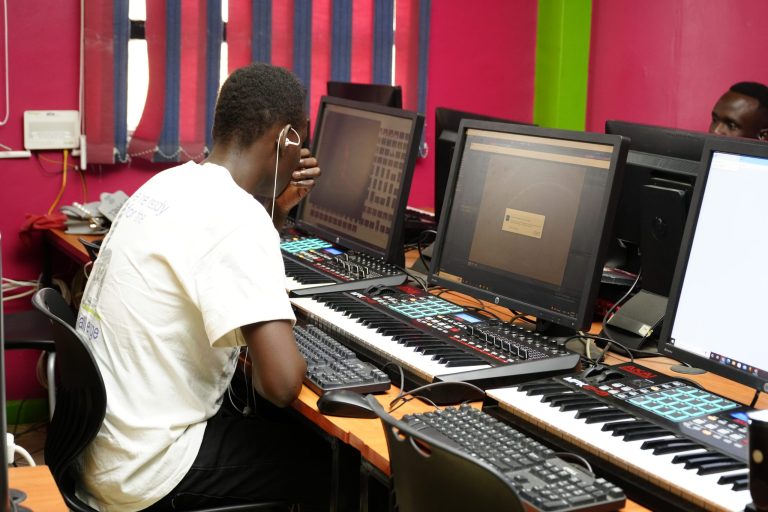
Modern music production relies heavily on digital technology. Producers can create, record and edit music using computers, audio interfaces, microphones, MIDI controllers and music-production software.
What Do You Learn in a Music Production Course in Nairobi?
A good music production course should combine technical knowledge with practical studio experience.
At Kamata Music School, music production and sound engineering training covers important areas of audio production, including recording techniques, mixing and mastering, digital audio workstations, sound design and live sound.
1. Digital Audio Workstations
Digital Audio Workstations, commonly called DAWs, are software programs used to record, edit, arrange and produce music.
Students can develop skills using music-production software and learn how different tools fit into the production workflow.
Understanding a DAW is an important foundation for anyone who wants to work professionally in music production.
2. Recording Techniques
Recording is one of the fundamental skills in music production.
Students learn how microphones and recording equipment are used to capture vocals and instruments. They can also develop an understanding of microphone placement, recording workflows and the equipment required in a studio environment.
These skills are useful for recording artists, musicians, voice-over projects and other forms of audio production.
3. Mixing and Mastering
A recorded song still needs to be processed before it is ready for listeners.
Mixing involves balancing different elements of a recording so that vocals, instruments, drums and other sounds work together.
Mastering is the final stage of audio preparation and helps produce a consistent finished recording suitable for distribution.
Learning these skills gives aspiring producers a stronger understanding of what happens between recording a song and releasing the final version.
4. Beat Making and Music Arrangement
Music producers need more than technical software skills. They also need to understand how musical elements work together.
Training can help students develop skills in:
- Beat creation
- Song arrangement
- Rhythm
- Melody
- Chord progressions
- MIDI programming
- Instrument selection
- Creative sound development
These skills can be applied across different musical genres and production styles.
5. Sound Design and Synthesis
Sound design involves creating and manipulating sounds for musical and other creative purposes.
Students can explore synthesis, sampling, effects and digital instruments to create sounds that fit their productions.
This can be particularly useful for electronic music, film audio, advertising, games and other creative industries.
6. Live Sound Engineering
Music production training can also introduce students to the technical side of live audio.
Live sound engineering involves setting up and operating audio equipment for performances and events. This can include microphones, mixing consoles, speakers and other sound equipment.
This gives students another possible direction beyond studio music production.
Do You Need Previous Music Production Experience?
Not necessarily.
Beginners can start learning music production by developing the fundamentals step by step. Kamata’s music production training is designed to accommodate learners at different skill levels, including people who are beginning their journey in music production.
You do not have to already be a professional musician to start learning production.
However, an interest in music, willingness to practice and curiosity about technology can make the learning process easier.
How Long Does a Music Production Course Take in Nairobi?
The duration depends on the institution and program structure.
Kamata’s Music Production & Sound Engineering program is structured across three semesters, with the full program described as taking approximately nine months.
The program progresses from foundational music and studio concepts into more advanced production and sound-engineering skills.
This structure gives students time to develop their skills rather than trying to learn the entire production process in a few lessons.
Career Opportunities After Studying Music Production
One of the biggest questions prospective students ask is:
What can I do with music production skills?
Music production can lead to several career and business opportunities.
Music Producer
A music producer helps artists develop and create songs. Depending on the project, a producer may contribute to arrangements, sound selection, recording, production decisions and the overall creative direction.
Recording Engineer
Recording engineers work with microphones, recording equipment and studio systems to capture high-quality audio.
Mixing Engineer
A mixing engineer focuses on combining recorded tracks into a balanced and polished production.
Mastering Engineer
Mastering engineers work on the final version of a recording before it is released or distributed.
Live Sound Engineer
Live sound engineers work with audio equipment for concerts, performances, events and other live productions.
Sound Designer
Sound designers create and manipulate audio for music, film, television, advertising, games and other forms of media.
Freelance Music Producer
Music production can also become a freelance business.
A producer can work with independent artists, musicians, content creators, churches, businesses, filmmakers and other clients who need audio services.
Can Music Production Be a Career in Kenya?
Yes. Music production skills can be used across Kenya’s growing creative and entertainment industries.
A trained producer can work with artists and recording studios or build an independent client base.
There are also opportunities where music production overlaps with other creative fields such as:
- Film and television
- Advertising
- Podcast production
- YouTube content
- Radio
- Live events
- Voice-over production
- Digital content creation
The ability to combine technical audio skills with creativity, communication and business skills can make a music producer more versatile.
Why Study Music Production in Nairobi?
Nairobi is an important center for Kenya’s creative and entertainment industries.
Studying in Nairobi can give students access to a city with recording studios, musicians, media companies, events and other creative professionals.
However, choosing a school should involve more than looking at its location.
Before enrolling, consider:
- Practical studio experience
- Equipment available to students
- Instructor experience
- Course curriculum
- Software taught
- Duration of training
- Assessment methods
- Career preparation
- Class schedules
- Overall course fees
Why Choose Kamata Music School for Music Production?
Kamata Music School provides music, media and creative arts training in Nairobi.
Its Music Production & Sound Engineering program combines practical training with areas such as recording, mixing, mastering, DAW software, sound design and live sound.
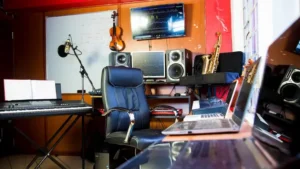
Students train at Kamata’s Nairobi campus at Queensway House, Kaunda Street, where the school provides a studio-based learning environment.
Kamata also offers other creative courses, including DJ, guitar, piano, voice coaching, photography and videography, and TV and film production.
This makes the school suitable for students who want to develop several complementary creative skills.
How Much Does Music Production Training Cost at Kamata?
Kamata’s published 2026 fee structure lists Music Production & Sound Engineering at:
- First semester: KSh 45,500
- Second semester: KSh 45,000
- Third semester: KSh 37,000
That makes it important for prospective students to check the current fee structure before enrolling because fees and program details can change.
Is Music Production Right for You?
A music production course may be a good choice if you:
- Enjoy creating or working with music
- Want to learn how songs are produced
- Are interested in recording and studio technology
- Want to produce your own music
- Want to work with artists
- Are interested in sound engineering
- Want to build a career in the creative industry
- Want to develop a freelance music-production business
You also do not have to decide immediately that you want to become a full-time music producer. The technical skills can be useful across several areas of the creative industry.
Frequently Asked Questions About Music Production Courses in Nairobi
What is taught in a music production course?
A music production course can cover recording, beat making, music arrangement, DAWs, MIDI, sound design, mixing, mastering and other studio-production techniques.
Can a beginner study music production?
Yes. Beginners can learn music production by starting with fundamental concepts and gradually developing their technical and creative skills.
How long does music production training take?
The duration varies by school and program. Kamata’s Music Production & Sound Engineering program is structured over three semesters and is described as a nine-month program.
What software do music producers use?
Music producers use Digital Audio Workstations such as FL Studio, Logic Pro, Ableton Live, Pro Tools and Cubase, depending on their workflow and specialization.
Can I make money from music production?
Yes. Producers can earn through studio work, freelance production, recording, mixing, live sound, sound design, collaborations and other creative services.
Do I need expensive equipment to start learning music production?
No. You can begin learning the fundamentals without owning a professional studio. As your skills develop, you can gradually invest in equipment such as a computer, headphones, microphone, audio interface and MIDI controller.
Start Your Music Production Journey in Nairobi
Learning music production can give you more than the ability to make beats. It can help you understand the complete process of turning musical ideas into professional audio while opening opportunities in music, entertainment and other creative industries.
If you are looking for a music production course in Nairobi, Kamata Music School offers practical Music Production & Sound Engineering training designed to help beginners and aspiring audio professionals build relevant production skills.
If your goal is to become a music producer, recording engineer, sound designer or live sound professional, the best place to start is by developing strong fundamentals and getting consistent practical experience.
Ready to start learning music production? Explore Kamata Music School’s Music Production & Sound Engineering course and find out how to enroll.